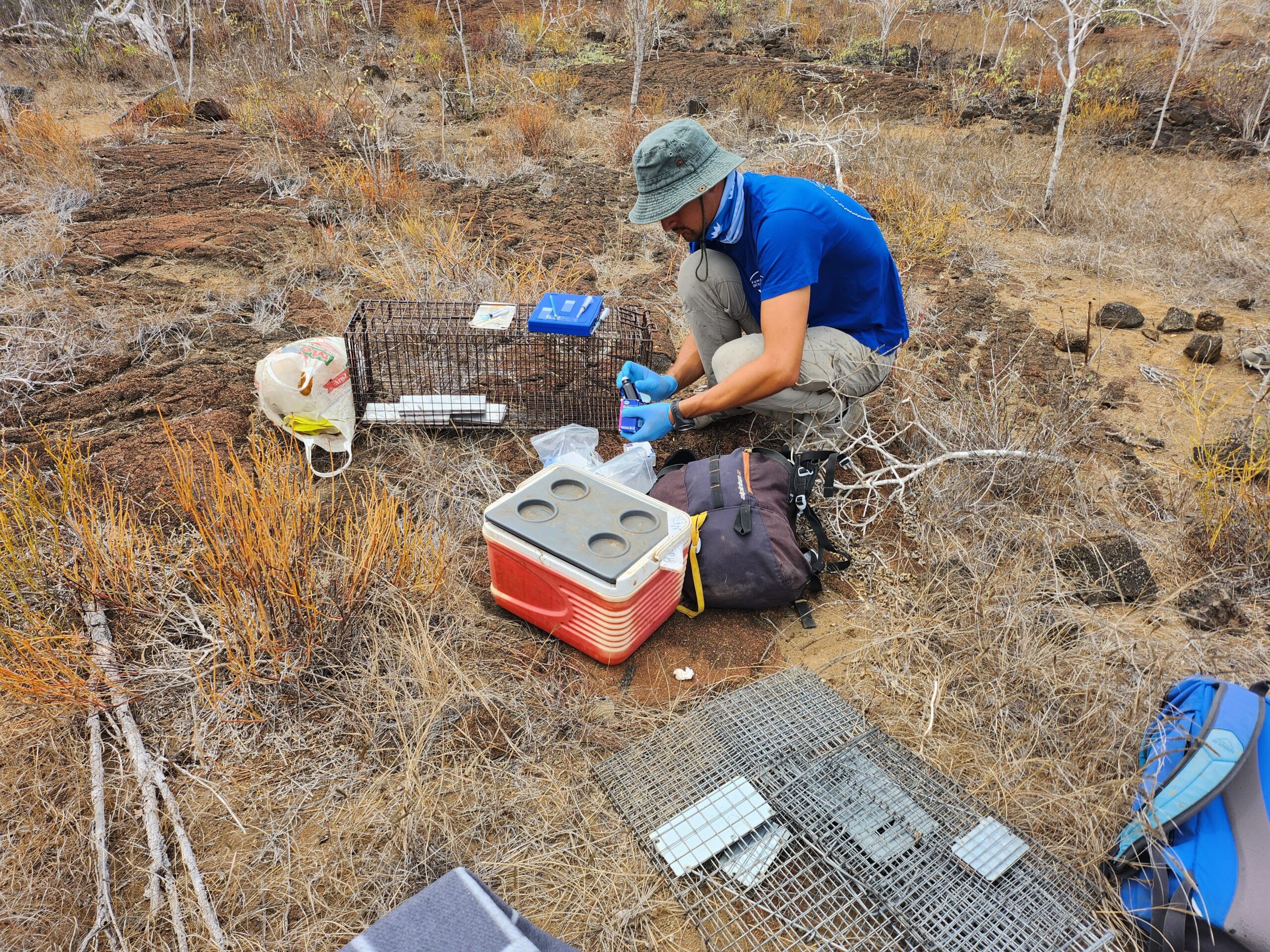
Monitoring the ecological impacts of introduced mammals on Galapagos ecosystems
Introduced mammals (i.e., rodents and cats) are considered among the main threats to wildlife in island ecosystems due to their voracious diet, high reproductive rates, and ability to endure long periods of starvation. The effects of these introduced mammals on island ecosystems are difficult to assess, primarily due to their interactions with other flora and fauna species.
Understanding their population dynamics, the influence of environmental variability on their diet, and their interrelationships with the Galapagos’ endemic flora and fauna contributes to improving control and management efforts against introduced mammals. Therefore, it is crucial to understand the ecological impacts these species have on conservation sites such as breeding colonies of sea lions, birds, iguanas, turtles, etc.